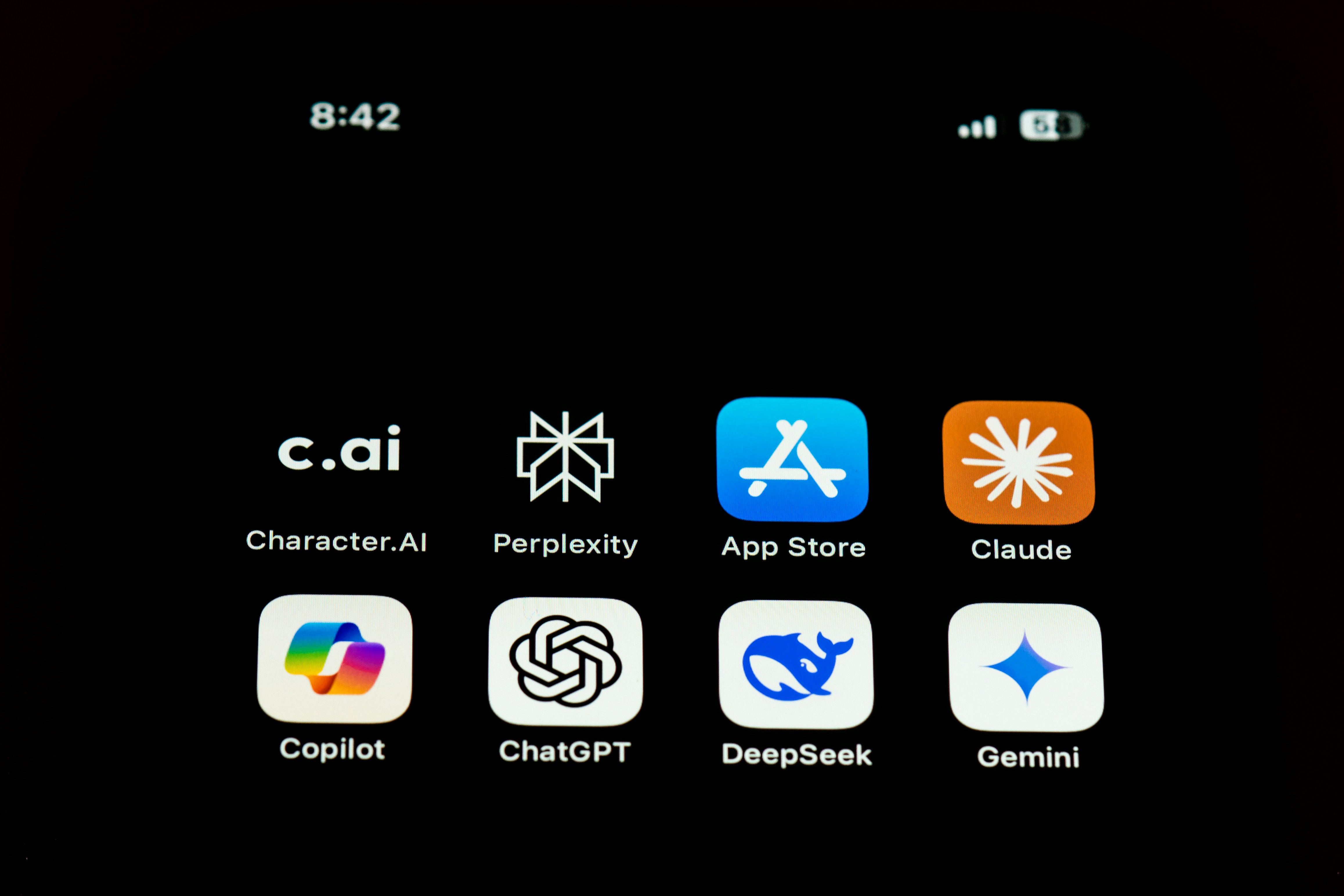
In February 2026, the Pew Research Center asked 5,119 American adults a plain question: which AI chatbots do you actually use? The answers came back lopsided in a way that should make you a little suspicious. Forty four percent named ChatGPT. Twenty four percent named Gemini. Just six percent named Claude. Now hold onto that for a second, because here is the part that rarely makes the headline. In that same survey, only about a quarter of Americans said they use a chatbot daily, and 51 percent said they never touch one at all. So the ranking you just read is not a ranking of quality. It is a ranking of who arrived first, who came preinstalled on your phone, and who you have simply never heard of. If you are paying twenty dollars a month for the wrong one, or paying anything at all when a free tier would cover you, that decision was probably made for you by a marketing budget rather than by anything you personally tested. Let us fix that.
The short answer, before you scroll
You should not need 2,500 words to get a usable answer, so here it is up front.
Choose ChatGPT if you want one assistant that handles the widest range of tasks competently and you would rather not think about the decision again. Choose Gemini if you live inside Gmail, Docs, Drive and an Android phone, or if you want the most generous free tier of the three. Choose Claude if your work is long form writing, careful reasoning, or serious software engineering, and you care more about the quality of one answer than about the number of features surrounding it.
That is the verdict. Everything below is the evidence, the pricing math, and the specific situations where that short answer turns out to be wrong for you.
| What you mostly do | Best pick | Why it wins for you |
| Everyday questions, quick facts | Gemini | Strongest free tier and it is already wired into Search and your phone. |
| Professional writing and editing | Claude | Holds a voice across long documents and pushes back on weak arguments. |
| Software engineering | Claude, then ChatGPT | Both lead coding evaluations. Claude leads on multi file work, ChatGPT on terminal tasks. |
| Deep research with sources | ChatGPT | The most mature research mode and the widest connector library. |
| Spreadsheets, slides, email drafts | Gemini | It sits inside Workspace, so there is no copy and paste tax. |
| Studying and homework help | ChatGPT | Study Mode plus free educator and student access in the US. |
| Running a small business | ChatGPT or Gemini | Cheapest path to admin controls, SSO and a no training guarantee. |
| Spending nothing at all | Gemini | The free plan does the most before it stops you. |
Table 1: Fast recommendation by primary use case. Verified against provider pricing pages in August 2026.
Where things actually stand in August 2026
Start with adoption, because it explains why this debate feels settled when it really is not.
Pew found that 49 percent of US adults now use AI chatbots, up from 33 percent in 2024. About a quarter use one every day, including four percent who describe their use as almost constant. Searching for information is the top use at 42 percent of adults, and among employed adults, 38 percent say they use chatbots for tasks at work. Yet trust has not moved anywhere near as fast. Seventy one percent of Americans expect increased AI use to make their personal information less secure, and 63 percent think the technology is advancing too quickly.
Brand by brand, the spread is enormous.
| AI chatbot | Share of US adults who use it (Feb 2026) |
| ChatGPT | 44 percent |
| Gemini | 24 percent |
| Copilot | 17 percent |
| Meta AI | 14 percent |
| Grok | 8 percent |
| Claude | 6 percent |
| Character.ai | 3 percent |
Table 2: Pew Research Center, “Americans and AI 2026,” survey of 5,119 US adults conducted February 17 to 23, 2026, margin of error plus or minus 1.6 points.
Read that table carefully, because it measures reach and not quality. ChatGPT has a four year head start and a brand name that became a verb. Gemini rides on Android, Chrome and Google Search. Claude built its business selling to developers and enterprises rather than to the general public, which is exactly why so few of your neighbors have heard of it and why a lot of the engineers building the software you use every day reach for it first.
On the business side the picture is different again. The US Census Bureau tracks this through its Business Trends and Outlook Survey, which samples roughly 1.2 million businesses every two weeks. Between December 2025 and May 2026, the share of American businesses using AI held between 17 and 20 percent, with another 20 to 23 percent expecting to adopt within six months. Size matters enormously. About 37 percent of firms with at least 250 employees reported using AI, and 32 percent of firms with 100 to 249 employees, while fewer than 20 percent of firms with four or fewer employees did. By sector, Information sat at 39.7 percent and Finance and Insurance at 33.9 percent against a national rate of 19.8 percent, while Retail Trade lagged near 14 percent.
A Federal Reserve analysis published in April 2026 adds a wrinkle that matters if you work for someone else. Firm level adoption looks modest at roughly 18 percent, but the Survey of Business Uncertainty estimates that about 78 percent of the labor force works at a company that has adopted AI in some form, and roughly 54 percent work somewhere using large language models specifically. In other words, a minority of companies have adopted, but they are the big ones, so most American workers are already downstream of this decision whether they picked a tool or not.
ChatGPT review: the default that earned it
ChatGPT is the safest single pick, and that is not a backhanded compliment. OpenAI ships more surface area than anyone: the GPT 5.6 model family, deep research, an agent that can browse and act, image and video generation, custom GPTs, scheduled tasks, code execution, voice, and integrations with Microsoft 365, Google Drive, Slack, GitHub, Linear and Figma. If you want one subscription that covers ninety percent of what a normal person or a small team needs, this is it.
What it does better than the other two
- Breadth. Nothing else combines research, image generation, video, agents and code in one consumer product this cleanly.
- Research depth. Its deep research mode remains the most mature of the three, and it is the one most likely to hand you a properly sourced brief instead of a confident summary.
- Ecosystem. Custom GPTs and the connector library mean it plugs into tools you already pay for.
- Education. OpenAI offers a free plan for verified US K through 12 educators through June 2027, plus a separate campus product for universities.
Where it frustrates people
- Model roulette. OpenAI routes your question to different models behind the scenes, and it does not always show you which one answered. Two identical prompts can produce very different quality.
- Ads on the cheap tiers. Since February 2026, the Free and Go plans carry advertising in the US. Paying eight dollars a month does not remove them.
- Default data settings. On consumer plans, your conversations are used for training unless you opt out in Data Controls. Business and Enterprise plans do not train on your data by default. If you are pasting client material into a personal account, go change that setting today.
- Prose voice. It writes competently and generically. You will spend real time stripping out the tics.
Gemini AI review: the one that is already on your phone
Google is playing a completely different game. It is not trying to win your standalone chatbot session. It is trying to make sure you never need one, because the AI is already sitting in the search box, the Gmail compose window, the Docs sidebar and the Android assistant button. Sixty percent of US adults now say they read the AI summaries at the top of search results, which means most Americans are consuming Google AI output daily without ever thinking of it as using a chatbot.
What it does better than the other two
- The free tier. It is the most generous of the three by a comfortable margin, and for a large share of people it is genuinely enough.
- Workspace integration. If your life runs on Gmail, Docs, Sheets and Drive, Gemini eliminates the copy and paste step that quietly eats hours.
- Context and multimodal work. A one million token context window means you can hand it a very long document, a full codebase or hours of transcript without chopping it up.
- Price to performance. The paid entry plan starts at under five dollars, which no competitor matches, and the flagship plan bundles cloud storage and video generation at the same price as its rivals.
Where it frustrates people
- Reasoning ceiling. On the hardest problems it still tends to trail ChatGPT and Claude, and the gap shows up most on multi step logic and nuanced writing.
- Constant reshuffling. Google has renamed and repriced its consumer AI plans repeatedly. Anything you read from six months ago is probably wrong.
- Confidence on shaky ground. In independent testing of financial questions, Gemini has produced badly mispriced figures while sounding entirely sure of itself. That is a general risk with all three, but worth naming.
Claude AI review: the specialist most people have not tried
Claude has six percent consumer reach and a wildly outsized reputation among people who write and code for a living. That gap is the single most interesting fact in this entire comparison. Anthropic built its business selling API access and enterprise seats rather than chasing consumer mindshare, so the product is tuned for depth over breadth.
What it does better than the other two
- Long form writing. It holds a consistent voice across thousands of words better than the alternatives, and it is markedly less likely to produce the flat, list heavy filler that makes AI text obvious.
- Coding. It consistently sits at or near the top of software engineering evaluations, and it is the model behind a large share of professional coding assistants.
- Pushing back. Ask it to critique your argument and it will actually find the weak spot rather than complimenting you and rephrasing what you said.
- The annual discount. Paying yearly brings the standard plan to seventeen dollars a month, the only sub twenty dollar path to a flagship tier among the three.
Where it frustrates people
- Fewer bells. No native video generation, and a smaller consumer feature set overall than ChatGPT.
- Usage limits bite. Limits reset on a rolling window of about five hours rather than a monthly quota, and Anthropic does not publish exact numbers. Heavy users hit walls and find it hard to predict when.
- Smallest ecosystem. Fewer third party integrations and a smaller community of tutorials and templates to lean on.
Editorial disclosure: this article was drafted with AI assistance, including Claude. Treat every claim here as something to verify against the primary sources listed at the end, particularly the sections that evaluate Claude itself.
ChatGPT vs Gemini vs Claude pricing
This is where most people quietly overspend. All three vendors have converged on nearly identical ladders: a free tier, a twenty dollar standard plan, a hundred dollar plan for roughly five times the usage, and a two hundred dollar plan for roughly twenty times. They copied each other into matching menus, which is convenient for comparison shopping and slightly depressing.
| Tier | ChatGPT (OpenAI) | Gemini (Google) | Claude (Anthropic) |
| Free | $0, with ads in the US | $0, most generous free tier | $0, runs the same default model as Pro |
| Entry paid | Go, $8 per month, still shows ads | AI Plus, $4.99 per month | None |
| Standard | Plus, $20 per month | AI Pro, $19.99 per month | Pro, $20 monthly or $17 with annual billing |
| Heavy use | Pro, $100 or $200 per month | AI Ultra, $99.99 or $199.99 per month | Max, $100 or $200 per month |
| Teams | Business, $20 per seat annually or $25 monthly, two seat minimum | Bundled into Workspace Business and Enterprise tiers | Team, $25 per seat annually or $30 monthly, five seat minimum |
| Enterprise | Custom, with data residency in ten regions | Custom, through Google Cloud | Custom, with SSO and configurable retention |
Table 3: Verified against openai.com, gemini.google and anthropic.com pricing pages in August 2026. These prices change often. Confirm before you buy.
Three practical notes on that table. First, if you are a solo user who bills clients, Claude annual at seventeen dollars a month is the cheapest flagship access available, and it comes with a contractual posture on training data that consumer ChatGPT does not match by default. Second, if you are two people who need admin controls, ChatGPT Business at twenty dollars per seat annually now costs the same per head as a personal Plus subscription while adding SSO, centralized billing and a no training guarantee, which makes the personal plan hard to justify for any business use. Third, Google AI Plus at $4.99 has no equivalent anywhere else, and for light users it is the single best value in the category.
Best AI for writing
Claude, and it is not especially close for anything longer than a paragraph.
The reason is structural. All three models can produce grammatically clean text. The difference shows up in voice consistency across length, in willingness to make a specific claim rather than hedge, and in how much of your final editing pass gets spent deleting phrases like “in today’s fast paced world.” Claude produces the fewest of those. ChatGPT is the strongest of the three at format juggling, meaning if you need the same content as a blog post, an email, a LinkedIn caption and a slide, it will do that reshaping faster. Gemini is the weakest for prose but the most convenient if the writing has to happen inside a Google Doc anyway.
One caution that applies to all three. Never publish a first draft. Every one of these models will invent a statistic, misattribute a quote or confidently cite a study that does not exist. Verify anything numeric before it goes out with your name on it.
Best AI for coding in 2026
Claude first, ChatGPT a very close second, Gemini third for reasoning but first for whole repository work.
Coding benchmarks have become genuinely messy, and you should treat any single number you see with suspicion. Most published scores are vendor reported, run on different agent scaffolds, and the most widely quoted evaluation is now considered contaminated for several frontier models. Scores that look like 88 percent on a public benchmark can fall into the forties on private commercial codebases. The honest summary is that Anthropic and OpenAI trade the lead depending on the week and the test, Anthropic tends to hold up better on multi file and agentic work, OpenAI tends to lead on terminal and command line tasks, and Google trails slightly on raw coding while winning on cost and on the ability to hold an entire large repository in context at once.
If you write code professionally, the practical advice is to run whichever one your team already pays for, then spend one afternoon feeding an identical real bug from your own codebase to all three. That single test will tell you more than every leaderboard combined.
Best AI for research
ChatGPT for breadth, Claude for judgment, Gemini for volume of source material.
ChatGPT deep research remains the most polished implementation, and it will go read dozens of sources and return a structured brief with citations. Claude is better at the part that comes after, which is telling you which of those sources is weak and why the consensus might be wrong. Gemini is the one to hand a thousand page PDF because it will actually hold the whole thing.
Whichever you pick, click the citations. All three will occasionally attach a real link to a claim that link does not support. That failure mode is more dangerous than an obvious hallucination, because it looks sourced.
Best AI for students
This is no longer a niche question. Gallup and the Lumina Foundation found in their 2026 State of Higher Education study that 57 percent of US college students use AI in their coursework at least weekly, including about one in five who use it daily, with business, technology and engineering majors leading.
ChatGPT is the pragmatic pick for most students. It has a dedicated Study Mode that walks you through a problem instead of handing you the answer, the widest tutorial ecosystem, and OpenAI has pushed hard on free educator and campus access. Claude is better if you write long papers and want feedback that actually challenges your thesis. Gemini is better if your school runs on Google Workspace for Education, which many do.
The real advice, though, is not about the tool. Check your syllabus. Policies vary by course, sometimes within the same department, and “the AI wrote it” is not a defense anywhere.
ChatGPT vs Gemini vs Claude for business
There are 36.2 million small businesses in the United States according to the SBA Office of Advocacy, representing 99.9 percent of all US businesses and about 46 percent of private sector employment. Most of them are not enterprises with a procurement team, and the Census data shows adoption among the smallest firms has barely moved.
If you run one of those businesses, here is the decision in plain terms. Skip the personal plans entirely the moment client data is involved. On consumer tiers, ChatGPT trains on your conversations by default. The business tiers of all three vendors contractually do not. That difference is worth more than any feature comparison.
| Business need | Best fit | The reasoning |
| Two to five people | ChatGPT Business | Twenty dollars per seat annually with a two seat minimum, SSO and SOC 2 Type 2. |
| Already on Workspace | Gemini | Bundled into Business Standard and above, so there is no second bill or second login. |
| Engineering team | Claude Team Premium | Includes Claude Code, though it requires a five seat minimum at a premium seat price. |
| Regulated industry | Enterprise tier, any vendor | You need data residency, audit logs and configurable retention, which only enterprise plans provide. |
| Customer facing content | Claude or ChatGPT | Better prose quality, and a human still has to sign off on every word. |
Table 4: Small business and team guidance based on published plan features as of August 2026.
One more thing worth naming, since money is involved. A NerdWallet study conducted by The Harris Poll in June 2026 found that 26 percent of Americans are now asking AI chatbots their personal finance questions, with 28 percent of those users citing the appeal of a non judgmental response and 12 percent saying they were too embarrassed to ask a real person. A separate Gallup survey with Edward Jones, fielded in spring 2026, found that about one in five Americans who sought financial advice in the past year turned to AI, but only about three in ten adults have a great deal or some confidence in AI for managing money, including just three percent who trust it a great deal. That gap between usage and trust is the correct instinct. Use these tools to understand your options. Do not use them as your accountant.
Best free AI chatbot
Gemini, with an important asterisk.
Google gives away the most before it stops you, and its free tier is a real product rather than a demo. Claude free is the interesting dark horse, because it now runs the same default model that paying subscribers get, just with tighter limits. That means the free Claude answer and the paid Claude answer are the same answer, which is not true everywhere. ChatGPT free is the weakest of the three in 2026, with a small context window, capped features and advertising in the US.
The asterisk is this. Free tiers on consumer plans generally come with the loosest data handling. If what you are typing would embarrass you or breach a client agreement if it surfaced somewhere, the free tier is the wrong place for it regardless of vendor.
The answer most comparison articles will not give you
Run two of them.
The gap between these three models on any given task is now smaller than the gap between a good prompt and a lazy one. What actually separates a useful AI habit from a wasteful one is having a second opinion available. When two models disagree about a fact, you have just been handed a free warning that the fact needs checking, and that is worth more than any benchmark score.
The cheapest version of this costs nothing. Use Gemini free for everyday questions since it is already on your phone, and keep Claude free open in a browser tab for anything you have to write or think hard about. If you eventually pay for one, pay for the one you reach for at the hardest moment of your week, not the one you use most often. Volume and value are different measurements.
Frequently asked questions
Which is better, ChatGPT or Gemini?
ChatGPT is better at hard reasoning, research and creative output. Gemini is better at integration, price and free access. If you already pay for Google One or use Workspace daily, Gemini gives you more for the same money. If you want the single strongest general assistant and do not care about the Google ecosystem, ChatGPT wins.
Which is better, ChatGPT or Claude?
Claude is better for writing, careful reasoning and coding. ChatGPT is better for everything else, including research mode, image and video generation, agents and integrations. Writers and engineers should try Claude. Generalists are usually happier with ChatGPT.
Is Gemini better than ChatGPT?
For everyday convenience and for anyone living inside Google products, yes. For difficult analytical work and polished writing, no. Gemini has closed most of the quality gap that existed two years ago, but it has not closed all of it.
Is Claude better than ChatGPT?
At writing and at software engineering, most professionals who have used both say yes. At breadth of capability, no. Claude does fewer things and does them unusually well. Only six percent of US adults have tried it, which says more about Anthropic’s marketing than about the product.
Which AI chatbot should I use for everyday use?
Gemini, mostly for a boring reason. It is already in your phone, your browser and your search results, and friction determines what you actually use. Sixty percent of US adults already read Google AI summaries in search without thinking of it as chatbot use.
What is the best AI chatbot for writing and research?
Split the job. Use ChatGPT deep research to gather and structure sources, then move the draft into Claude to write it. That two step workflow beats any single tool, and on free tiers it costs nothing.
What is the best AI for coding in 2026?
Claude for multi file and agentic work, ChatGPT for terminal and command line tasks, Gemini for very large repositories where context size matters more than raw reasoning. Ignore leaderboard screenshots and test all three on one real bug from your own codebase.
Do I actually need to pay for any of them?
Probably not, at first. Run the free tiers for two weeks and notice when you hit a wall. If you never hit one, stop there. If you hit the same wall three times, that is your signal, and it also tells you which plan to buy.
Are ChatGPT alternatives worth switching to?
Switching entirely is rarely worth it. Adding a second tool almost always is. Keep your main assistant and open a free account somewhere else for second opinions on anything that matters.
Which is best for a small business?
ChatGPT Business at twenty dollars per seat on annual billing is the cheapest route to admin controls, SSO and a contractual no training guarantee, with a two seat minimum. If you already pay for Google Workspace Business Standard or above, Gemini is effectively free to you and that is hard to beat.
Sources and references
Prices, model names and plan structures in this article were verified in August 2026 and change frequently. Confirm current details on each vendor’s official pricing page before purchasing.
1. Pew Research Center, “Americans and AI 2026: Chatbots, Smart Devices and Views on Impact,” June 17, 2026. https://www.pewresearch.org/internet/2026/06/17/americans-and-ai-2026-chatbots-smart-devices-and-views-on-impact/
2. U.S. Census Bureau, “Large Firms With at Least 20 Employees Biggest AI Users,” Business Trends and Outlook Survey, May 2026. https://www.census.gov/library/stories/2026/05/ai-use-businesses.html
3. Board of Governors of the Federal Reserve System, “Monitoring AI Adoption in the U.S. Economy,” FEDS Notes, April 3, 2026. https://www.federalreserve.gov/econres/notes/feds-notes/monitoring-ai-adoption-in-the-u-s-economy-20260403.html
4. U.S. Small Business Administration, Office of Advocacy, “2025 Small Business Profiles for the States, Territories, and Nation.” https://advocacy.sba.gov/2025/06/30/new-advocacy-report-shows-the-number-of-small-businesses-in-the-u-s-exceeds-36-million/
5. NerdWallet, “Data: Americans Are Using Chatbots for Financial Advice. Risky or Rewarding?” Harris Poll survey of 2,003 US adults, June 2026. https://www.nerdwallet.com/finance/studies/using-ai-for-personal-finances
6. Gallup and Lumina Foundation, “AI Is Routine for College Students, Despite Campus Limits,” 2026 State of Higher Education study. https://news.gallup.com/poll/704090/routine-college-students-despite-campus-limits.aspx
7. OpenAI, official ChatGPT business and consumer pricing pages. https://openai.com/business/chatgpt-pricing/
8. Anthropic, official Claude pricing page. https://www.anthropic.com/pricing
9. Pew Research Center, “How opinions and use of AI differ by age,” June 17, 2026. https://www.pewresearch.org/internet/2026/06/17/how-opinions-and-use-of-ai-differ-by-age/